
Fast And Forward
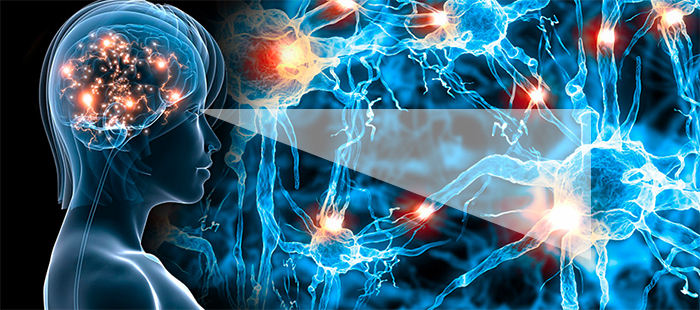
With the passage of time, the distance between knowledge and mankind is getting shorter and shorter. More than a decade ago, if one needed a large amount of data he/she had to undertake the cumbersome task of trudging through a horrifying number of books and journals. Today, the availability of information on the web has reduced the access time to only a few minutes But what if I told you that the next iteration of information design will reduce this time to only a matter of seconds?! This is where the ‘neural lace’ technology comes to light.
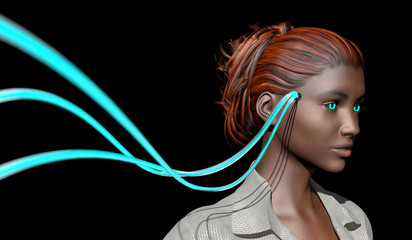
The term ‘neural lace’ was initially coined by a Scottish writer Ian M Banks in his fictional Sci-Fi novels The Culture Series.’ Charles Leiber (Harvard University) with the assistance of other researchers and the National Center of Nanoscience and Technology (Beijing) injected the first fully functioning neural lace prototype in mice and tested successfully over a period of 8 months. It is an ultra-thin electronic mesh that grows with the brain cells and acts as a wireless interface between the device and the brains circuitry. Dumb it down? It’s a computer in a brain!
The most important question that arises is how these neural laces can effectively benefit the human race. How welcoming a mechanical component in a biological environment can alter its functionality in a positive manner? The answer is simple. The electronic mesh allows us to achieve a greater control on our brain activity and sensory abilities. Gigabytes or even Terabytes of information can be stored in one organ and accessed in a few seconds. Who would need Google then? Neurodegenerative diseases like Alzheimer’s and Parkinson’s can be cured to regrow damaged tissues by coupling it with the sensor. Rewiring the circuitry of the neural lace can impart knowledge on a dynamic spectrum to the human brain. Who knows you might learn Calculus or master your linguistic skills in French without making any physical attempt to do so.

The success of the neural lace is a question that remains unanswered but with the increasing amount of research and experimentation being done on the technology who knows, maybe the future is only a needle away!
Tag:neural laces, science